Knowledge Base Security Checklist: RBAC, MFA, Audits, and Training
Knowledge Base Security Checklist For Teams
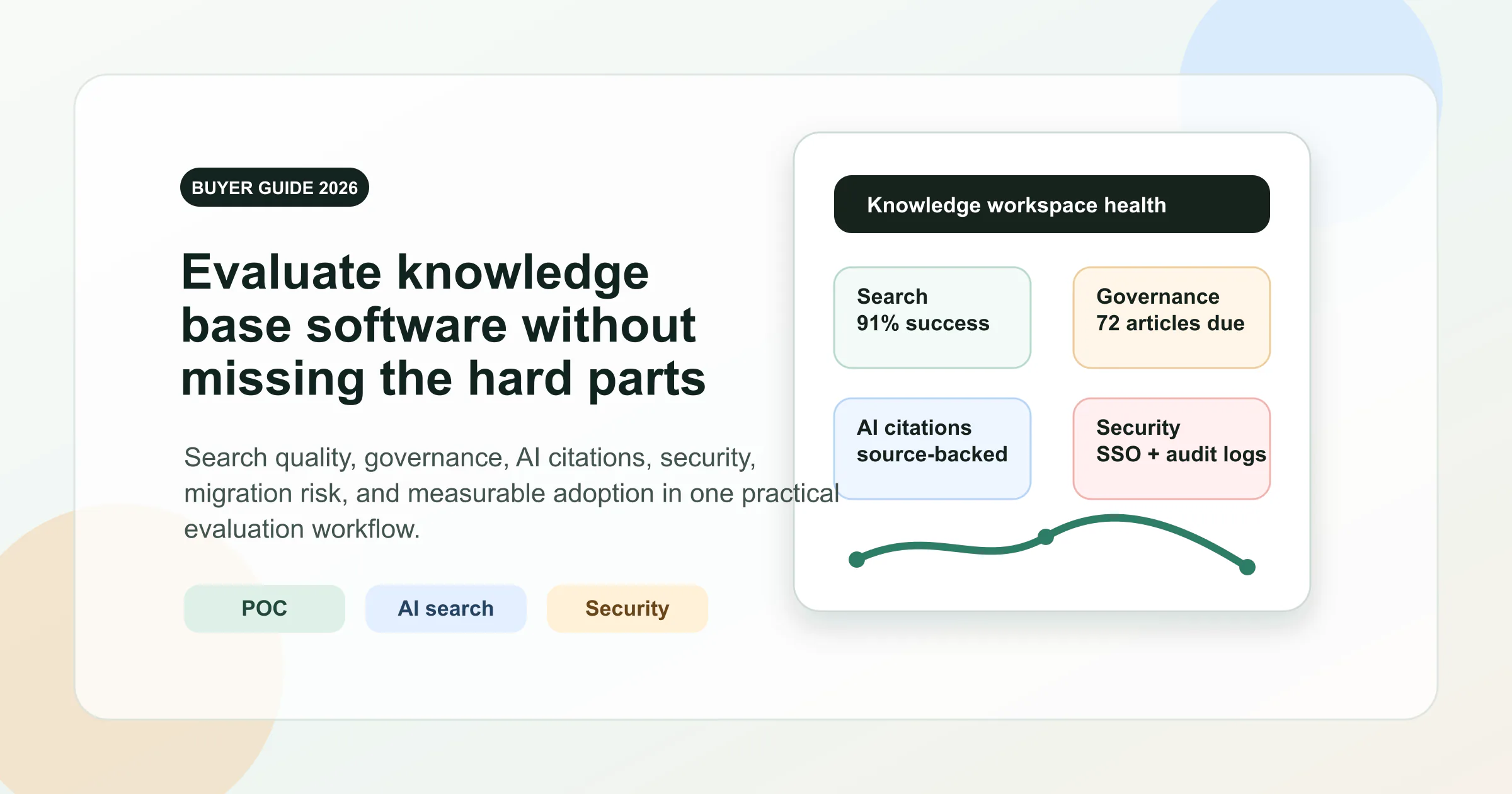
Intent split: This checklist supports the deeper guide on how to secure your team knowledge base and the broader knowledge base software buyer guide.
In today’s fast-paced business environment, collaborative workspaces are essential for teams to share ideas, documents, and critical information efficiently. Knowledge bases-a centralized repository of information-empower teams to access and contribute valuable insights that drive innovation and productivity. However, as these platforms grow in use and complexity, they become prime targets for cyber threats. Securing your team’s knowledge base is no longer optional; it is a critical component of your IT security strategy.
Recent studies highlight the urgency of this issue. According to IBM’s Cost of a Data Breach Report 2023, the average cost of a data breach reached $4.45 million, underscoring the financial impact of inadequate security measures. Furthermore, 95% of cybersecurity breaches are due to human error or weak access controls. These statistics emphasize the need for robust practices, especially when managing collaborative knowledge bases that multiple users access daily.
Collaborative knowledge bases are at the heart of modern teamwork, enabling real-time information sharing and decision-making. But this convenience comes with risks. A single vulnerability can compromise the entire system, leading to data leaks, intellectual property theft, or operational disruptions. In fact, a study by Verizon found that 85% of breaches involve a human element, such as phishing or credential theft. This further stresses the importance of combining technological safeguards with employee awareness.
One effective approach to mitigate these risks is partnering with specialized IT security firms that understand the intricacies of collaborative environments. For example, companies like Jumpfactor Marketing offer tailored marketing and security solutions designed to protect digital assets while enabling seamless collaboration. Leveraging such expertise can help organizations establish a secure foundation for their knowledge base.
Understanding Common Security Risks in Collaborative Workspaces
Collaborative platforms introduce several unique security risks. Unauthorized access, accidental data leaks, and insider threats are some of the most common challenges. When teams use shared credentials or fail to update permissions regularly, sensitive information can easily be exposed. Moreover, third-party integrations, while enhancing functionality, often expand the attack surface, creating additional vulnerabilities.
Beyond external partnerships, internal policies must address these risks comprehensively. For instance, enforcing strict password policies, limiting file sharing to authorized personnel, and conducting regular security audits are essential steps. The risk of insider threats-whether malicious or accidental-can be minimized by monitoring user activities and implementing least-privilege access principles.
Best Practices for Securing Your Knowledge Base
1. Implement Role-Based Access Control (RBAC)
Not every team member requires full access to the entire knowledge base. Implementing RBAC ensures users can only view or edit information relevant to their role. This minimizes the risk of accidental or malicious data exposure. RBAC also simplifies permission management, especially in large teams or organizations with complex hierarchies.
By segmenting access, organizations can reduce the attack surface and limit the blast radius if an account is compromised. For example, a marketing team member should not have editing rights to financial data, and vice versa. Regularly reviewing and updating these roles ensures that access remains aligned with current responsibilities.
2. Use Multi-Factor Authentication (MFA)
MFA adds an extra layer of security beyond just passwords. By requiring a second verification step, such as a biometric scan or a one-time code, you significantly reduce the chances of unauthorized access. According to Microsoft, MFA can block over 99.9% of account compromise attacks.
Implementing MFA for all users accessing the knowledge base, especially administrators, is a straightforward yet highly effective defense measure. It can prevent attackers from using stolen credentials or brute-force attacks to gain entry.
3. Regularly Audit User Permissions and Activity
Routine audits help identify outdated permissions and unusual access patterns that could signal a breach. Establishing automated alerts for suspicious activity can enable swift responses before damage occurs. User behavior analytics tools can detect anomalies such as access from unusual locations or times, multiple failed login attempts, or bulk data downloads.
Auditing also involves reviewing which users still require access and removing those who no longer do, such as former employees or contractors. This practice helps maintain a clean and secure environment.
4. Encrypt Data at Rest and in Transit
Data encryption ensures that information remains unreadable to unauthorized users, whether it’s stored on servers or transmitted across networks. Encryption protocols like TLS and AES are industry standards that safeguard sensitive content.
Encryption protects against eavesdropping and data interception, especially important when teams access the knowledge base remotely or via cloud services. Organizations should verify that their knowledge base platform supports end-to-end encryption and regularly update encryption standards to counter emerging threats.
5. Train Your Team on Security Awareness
Human error remains a leading cause of data breaches. Providing ongoing cybersecurity training educates employees on recognizing phishing attempts, managing passwords securely, and understanding the importance of protecting the knowledge base. Training should be interactive and updated regularly to reflect the latest threat landscape.
According to a report by Proofpoint, 88% of organizations experienced phishing attacks in 2023. Educating teams on spotting and reporting such attempts can drastically reduce the risk of compromise.
6. Partner with Reliable Security Providers
Collaborating with trusted IT security companies can enhance your defense mechanisms. For instance, CloudSecureTech specializes in cloud security solutions that protect collaborative platforms from evolving cyber threats. Their expertise can help customize security frameworks aligned with your organization’s needs.
These partnerships often provide access to advanced tools such as threat intelligence, incident response teams, and compliance management, which may be beyond the capacity of in-house IT departments.
Leveraging Technology to Enhance Knowledge Base Security
Adopting advanced security technologies is crucial for protecting your collaborative workspace. Artificial intelligence (AI) and machine learning can monitor user behavior in real time, detecting anomalies that may indicate insider threats or compromised accounts. These technologies can also automate routine security tasks, freeing up IT staff to focus on strategic initiatives.
Additionally, automated backup solutions ensure data integrity and availability in case of ransomware attacks or accidental deletions. Regular backups, stored securely and tested for restorability, are vital components of a resilient knowledge base infrastructure.
Cloud-based knowledge bases offer scalability and accessibility but require stringent security configurations. According to Gartner, by 2025, 99% of cloud security failures will be the customer’s fault due to misconfigurations or inadequate controls. This statistic highlights the necessity of expert guidance when deploying cloud-based collaborative tools.
To mitigate these risks, organizations should adopt cloud security best practices such as enabling encryption, configuring firewalls, and enforcing identity and access management policies. Regular penetration testing and vulnerability assessments can uncover weaknesses before attackers do.
Building a Culture of Security in Collaborative Workspaces
Technology alone cannot guarantee security. Organizations must foster a culture where information protection is a shared responsibility. Encourage transparent communication about security policies and create clear protocols for reporting suspicious activities. Leadership commitment to security can motivate teams to prioritize best practices consistently.
Regularly updating and testing incident response plans ensures preparedness for potential breaches. Simulated phishing exercises and tabletop scenarios help teams practice their roles during a security event, minimizing panic and confusion. These exercises can reveal gaps in response procedures and improve coordination among departments.
Moreover, incentivizing secure behavior and recognizing employees who contribute to security efforts can reinforce positive habits. Security champions within teams can act as liaisons between IT and end-users, facilitating ongoing education and support.
Conclusion
Securing your team’s knowledge base requires a comprehensive approach that combines technology, processes, and people. By implementing best practices such as RBAC, MFA, encryption, and regular audits, organizations can significantly reduce vulnerabilities in their collaborative workspaces. Partnering with specialized providers can further strengthen your security posture, ensuring that your knowledge assets remain protected against ever-evolving cyber threats.
In an era where data is a strategic asset, investing in IT security for your collaborative tools is not just prudent-it’s essential for sustaining innovation and maintaining trust with clients and stakeholders. With robust security measures in place, teams can collaborate confidently, knowing their knowledge base is safeguarded against current and future challenges.