AP Lit Calculator (2026): Estimate Your Score and Build a Study Plan
An AP Lit calculator is an unofficial score-estimation tool. It turns practice-test inputs — 55 multiple-choice answers plus three free-response essay rubric scores — into a likely AP English Literature and Composition score range. Use it to plan your next study cycle, not to predict your official College Board result.
Reviewed by Allen, AFFiNE content team. Updated June 26, 2026. This guide was checked against the College Board's official AP English Literature and Composition exam page, current AP score distribution resources, and AFFiNE's editorial policy. Calculator tools mentioned here are third-party estimators unless explicitly labeled as College Board resources.
Quick answer: what an AP Lit calculator can tell you
An AP Lit calculator can help you answer three practical questions after a practice exam:
- What score range does my current practice performance suggest?
- Which section is limiting my score more: multiple choice or free response?
- What should I practice before the next timed exam?
It cannot tell you your official AP score. The College Board does not publish a public, official AP Lit score calculator. Official AP scores are reported on a 1-5 scale after the exam is administered and scored. Third-party calculators such as Albert.io, AP Pass, Fiveable-style predictors, and college-advising score guides estimate from historical patterns and public scoring information.
The best way to use a calculator is simple: enter your practice-test results, write down the estimated range, compare that estimate with your rubric notes, and turn the weakest section into a short study plan.
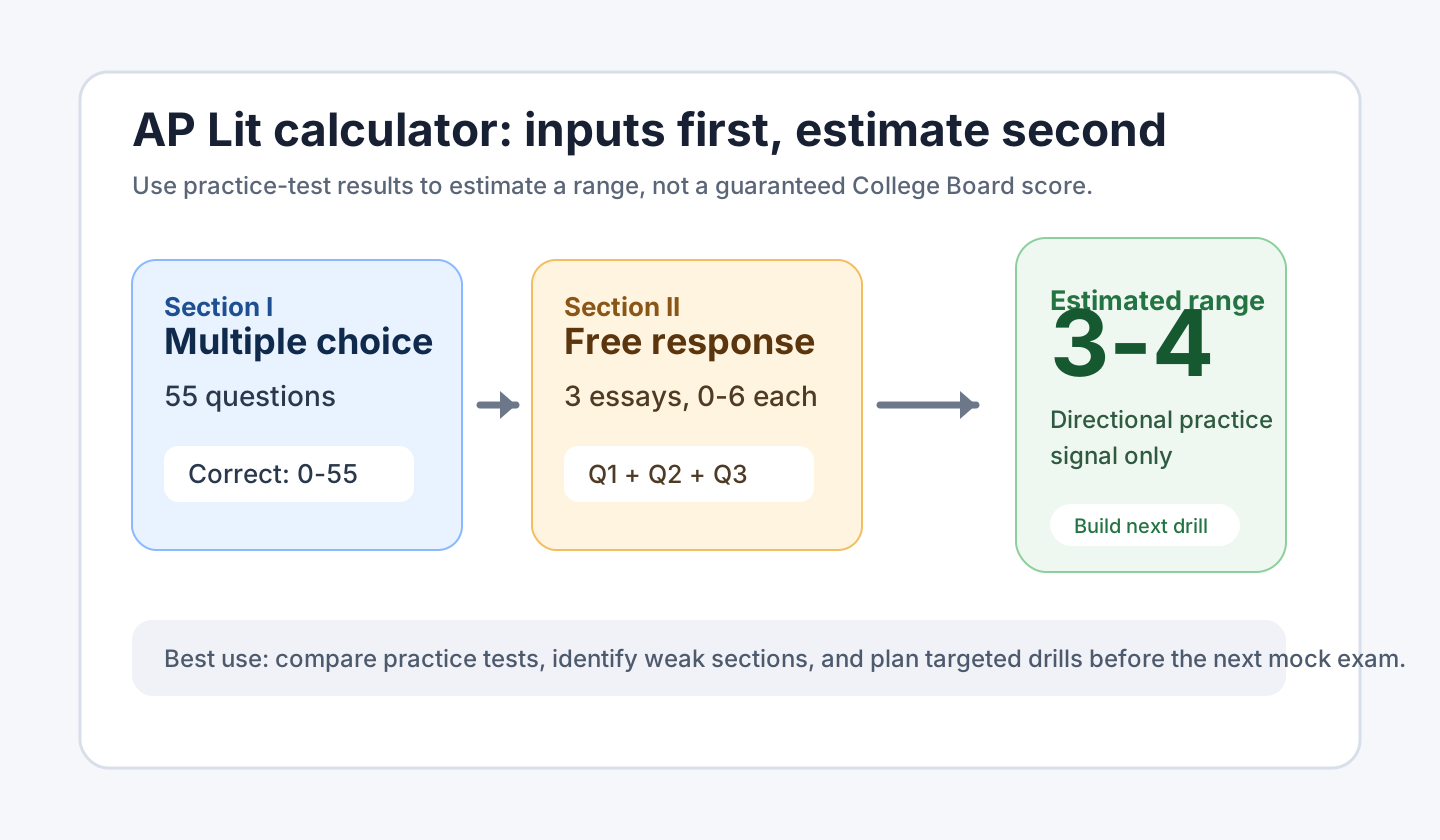
Figure: A score calculator is most useful when it connects raw practice inputs to a specific next study action.
How AP Lit scoring works in 2026
The official AP English Literature and Composition exam page gives the structure you should use as the baseline for any calculator:
| Section | What you do | Time | Weight |
|---|---|---|---|
| Section I: Multiple Choice | 55 passage-based questions | 1 hour | 45% |
| Section II: Free Response | 3 essays: poetry analysis, prose fiction analysis, and literary argument | 2 hours | 55% |
The 2026 AP English Literature and Composition exam is listed by the College Board for Wednesday, May 6, 2026, at 8 AM local time. The exam is also described as a fully digital exam completed in Bluebook, with both multiple-choice and free-response answers submitted through the testing app.
That matters for calculators because the free-response section carries slightly more weight than multiple choice. A student with strong MCQ performance but weak essays may still be below a 4-range estimate. A student with average MCQ performance and consistently strong essays may be closer than expected.
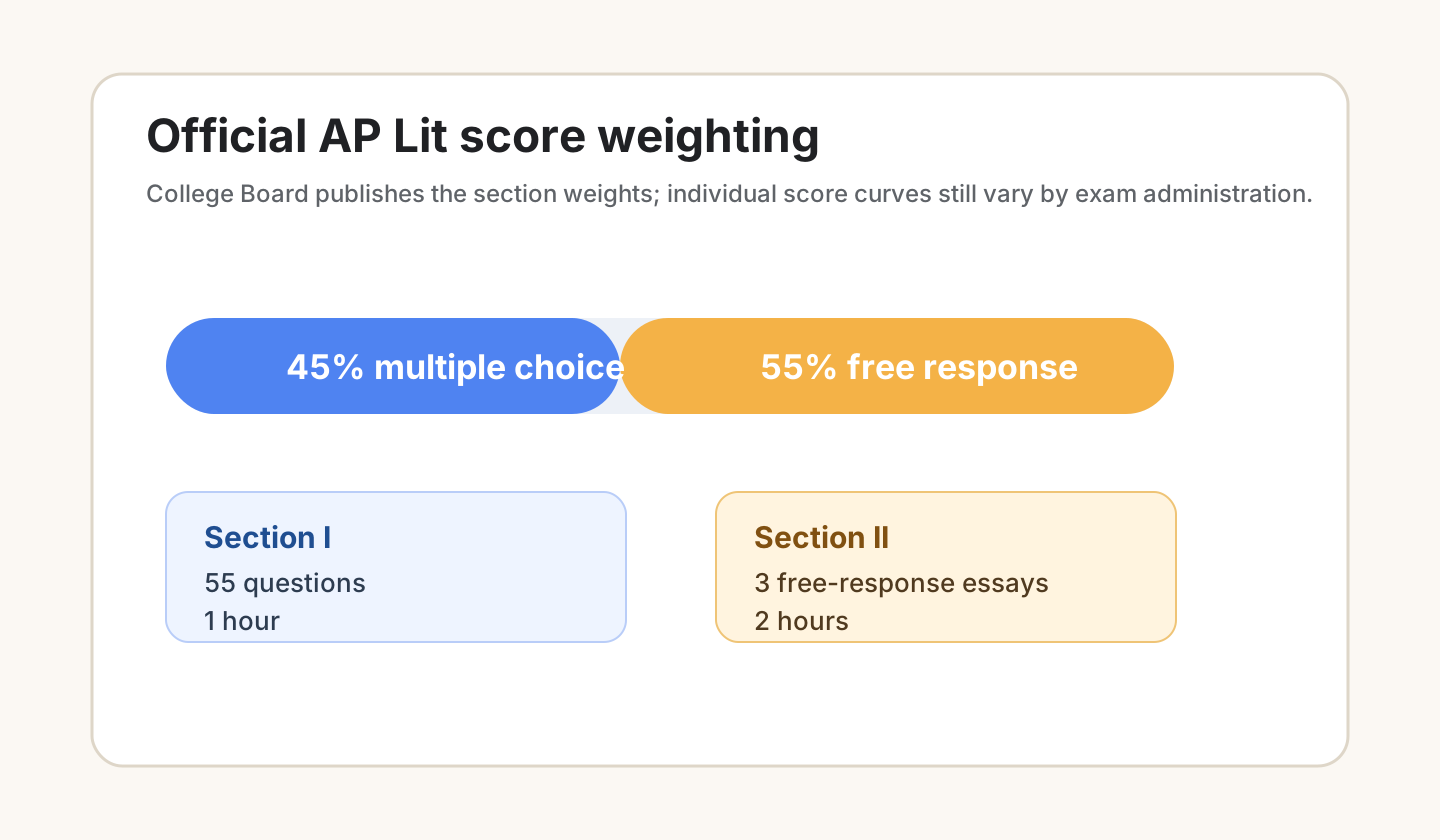
Figure: AP Lit calculators should start from the official 45% multiple-choice and 55% free-response weighting.
How to use an AP Lit calculator in 5 steps
Step 1: Take a practice set under timed conditions
Use a complete practice exam when possible. If you only have one section, mark the calculator output as partial. Mixing a relaxed MCQ drill with a timed essay score can make the estimate look cleaner than your exam-day performance.
Step 2: Record your raw scores separately
Keep these four inputs separate before entering anything into a calculator:
| Input | Range to record | Why it matters |
|---|---|---|
| Multiple-choice correct | 0-55 | Drives 45% of the final score |
| Poetry analysis essay | 0-6 | Tests close reading and commentary |
| Prose fiction analysis essay | 0-6 | Tests passage interpretation |
| Literary argument essay | 0-6 | Tests evidence from a selected work |
If your teacher uses the official analytic rubric, record the rubric score and one sentence explaining why you received it. That note is more valuable than the number alone.
Step 3: Run the same inputs through two calculators
Use at least two independent estimators when you can. If one tool predicts a 4 and another predicts a 3, treat the result as a range and inspect the assumptions. Some tools are conservative with essays; others lean heavily on historical raw-score conversions.
Step 4: Compare the estimate with the rubric comments
A calculator tells you the likely score band. Rubric comments tell you what to fix. If your predicted range is 3-4 and your teacher's notes repeatedly mention thin commentary, the next study task is not another calculator run; it is commentary practice.
Step 5: Turn the result into a 7-10 day plan
Set one focus for the next cycle. For example: two poetry close-reading drills, one timed Q1 essay, one thesis rewrite session, and one mixed MCQ passage set. Track each attempt in a planner so the next calculator result has context.
For students who prefer a structured workspace, AFFiNE's free college schedule maker, Cornell notes example, and student AI note-taking guide can help keep practice tests, rubric feedback, and weekly drills in one place.
Top AP Lit calculator options compared
The right calculator depends on what you need after a practice test. Avoid choosing only by a tool's accuracy claim; most public accuracy claims are vendor-reported and depend on old exam data, sample size, and how the tool handles essays.
| Tool or resource | Best use | Strength | Limitation |
|---|---|---|---|
| Albert.io AP English Literature score calculator | Full practice-test estimation | Clear MCQ and free-response inputs | Third-party estimate, not official |
| Fiveable AP Lit resources | Study review and community explanations | Accessible student-facing guides | Public calculator assumptions can be less transparent |
| AP Pass Literature calculator | Fast score-range checks | Simple and free | May not reflect the newest digital-exam context |
| College Transitions AP Lit score guide | Understanding score bands and college-credit context | Pairs score discussion with admissions context | Not a College Board calculator |
| Bluebook practice | Digital exam familiarity | Official testing-app practice environment | Does not replace a score calculator |
Use a quick estimator after short practice sets. Use a rubric-focused tool or teacher feedback after essays. Use a planning tool only after you know what needs work.
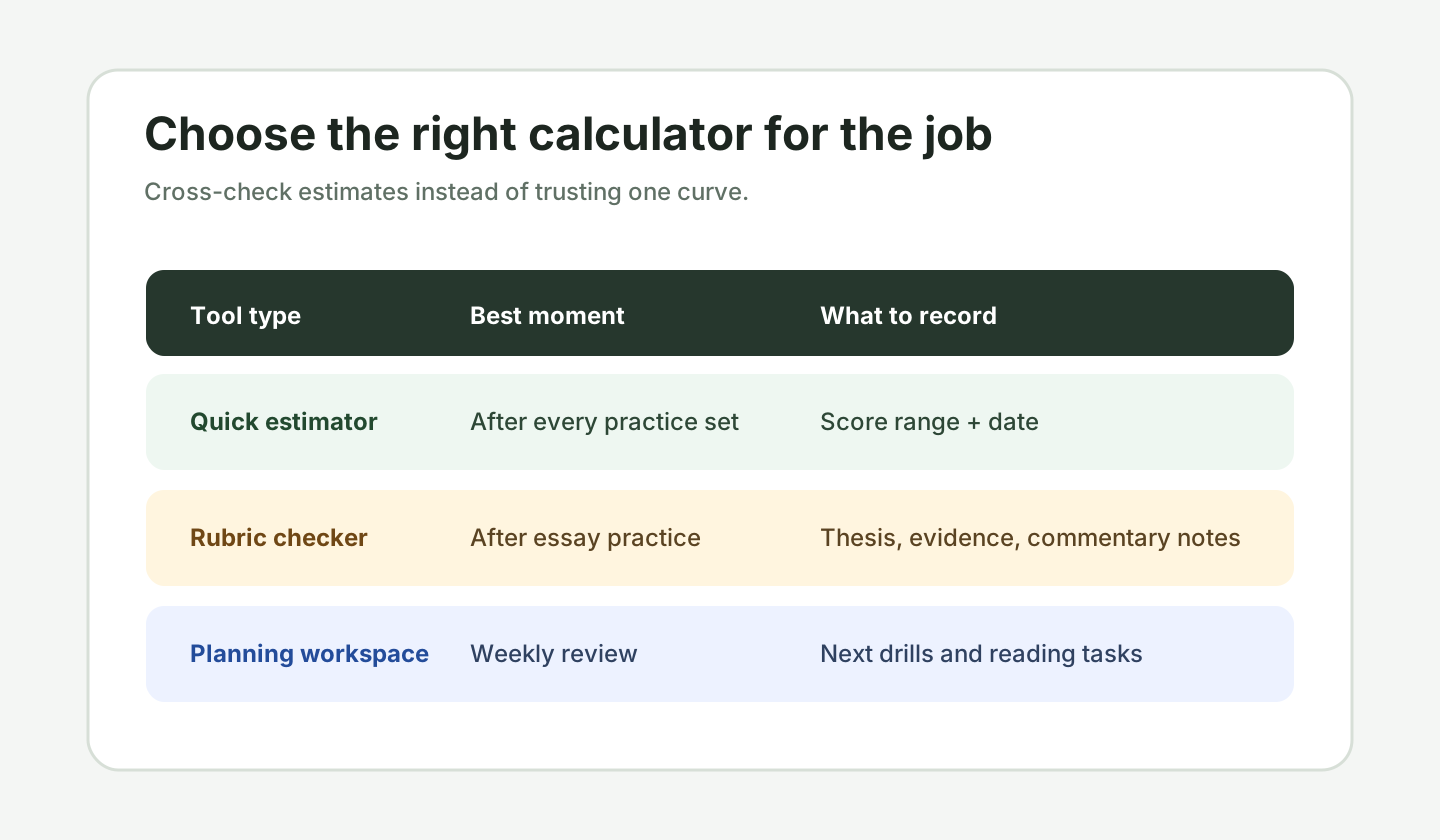
Figure: Different tools answer different questions; a score estimate, rubric diagnosis, and weekly plan should not be treated as the same thing.
AP Lit vs AP Lang calculators
AP Lit and AP Lang calculators are not interchangeable. Both exams use 1-5 AP scores, but they test different skills and use different section structures.
| Question | AP Literature | AP Language |
|---|---|---|
| Main reading focus | Fiction, drama, poetry, literary argument | Nonfiction, rhetoric, argument, synthesis |
| Essay emphasis | Literary analysis and interpretation | Rhetorical analysis, argument, synthesis |
| Calculator risk | Underestimating essay impact | Mixing Lang essay assumptions into Lit scoring |
If you take both exams, keep separate spreadsheets or pages for each one. Label the calculator, date, MCQ score, essay scores, and source of the practice material. This prevents a common mistake: using a Lang-style time or essay plan for a Literature practice cycle.
AP Spanish Lit calculator cross-prep: useful, but limited
An AP Spanish Literature calculator can be useful for study organization if you are taking both literature exams, but it should not be used to estimate AP English Lit scores. The languages, required readings, rubrics, and exam tasks are different.
What transfers well:
| Transferable habit | How it helps AP English Lit |
|---|---|
| Tracking literary movements | Helps with context and thematic comparison |
| Keeping a quote bank | Speeds up literary argument evidence selection |
| Practicing short commentary | Improves evidence-to-interpretation links |
What does not transfer cleanly:
- Raw-score conversions
- Required-work assumptions
- Essay rubric details
- Calculator thresholds
If you are preparing for both, use one shared study dashboard but separate calculator logs. AFFiNE works well for this because you can keep literature notes, score snapshots, and reading plans side by side without mixing the scoring models.
2026 exam updates that affect calculator use
The important 2026 update for students is not a secret new curve. It is the exam environment: the College Board describes AP English Literature and Composition as a fully digital Bluebook exam. That means students should practice not only literary analysis, but also the digital workflow: reading passages on screen, managing time in the app, and typing free-response essays under exam conditions.
When you evaluate a calculator in 2026, check these items:
- Does it use the official 45% / 55% section weighting?
- Does it let you enter all three essay scores separately?
- Does it explain that the output is an estimate?
- Does it avoid promising an official score?
- Does it encourage you to review free-response scoring guidelines?
If a calculator claims extreme precision without explaining its assumptions, treat the output as a rough practice signal only.
How to turn a predicted score into a study plan
A predicted score is useful when it changes your next week of practice. Here is a practical example.
| Calculator result | What it may mean | Next action |
|---|---|---|
| 2-3 range | Foundational gaps remain | Rebuild passage annotation and thesis basics |
| 3-4 range | Passing range, but inconsistent | Target the weakest essay type and mixed MCQ sets |
| 4-5 range | Strong performance with precision gaps | Practice timed polish and reduce avoidable rubric misses |
If your estimate is around 3.7, do not spend the whole week trying to "become a 4." Break the score into a concrete plan:
| Day | Focus | Deliverable |
|---|---|---|
| Monday | Poetry close reading | Annotate one poem and write a thesis |
| Tuesday | MCQ passage set | Complete 12-15 questions and log misses |
| Wednesday | Prose essay | Write one timed paragraph and revise commentary |
| Thursday | Literary argument | Build a 5-work evidence bank |
| Friday | Mixed review | Re-run calculator only after new practice data |
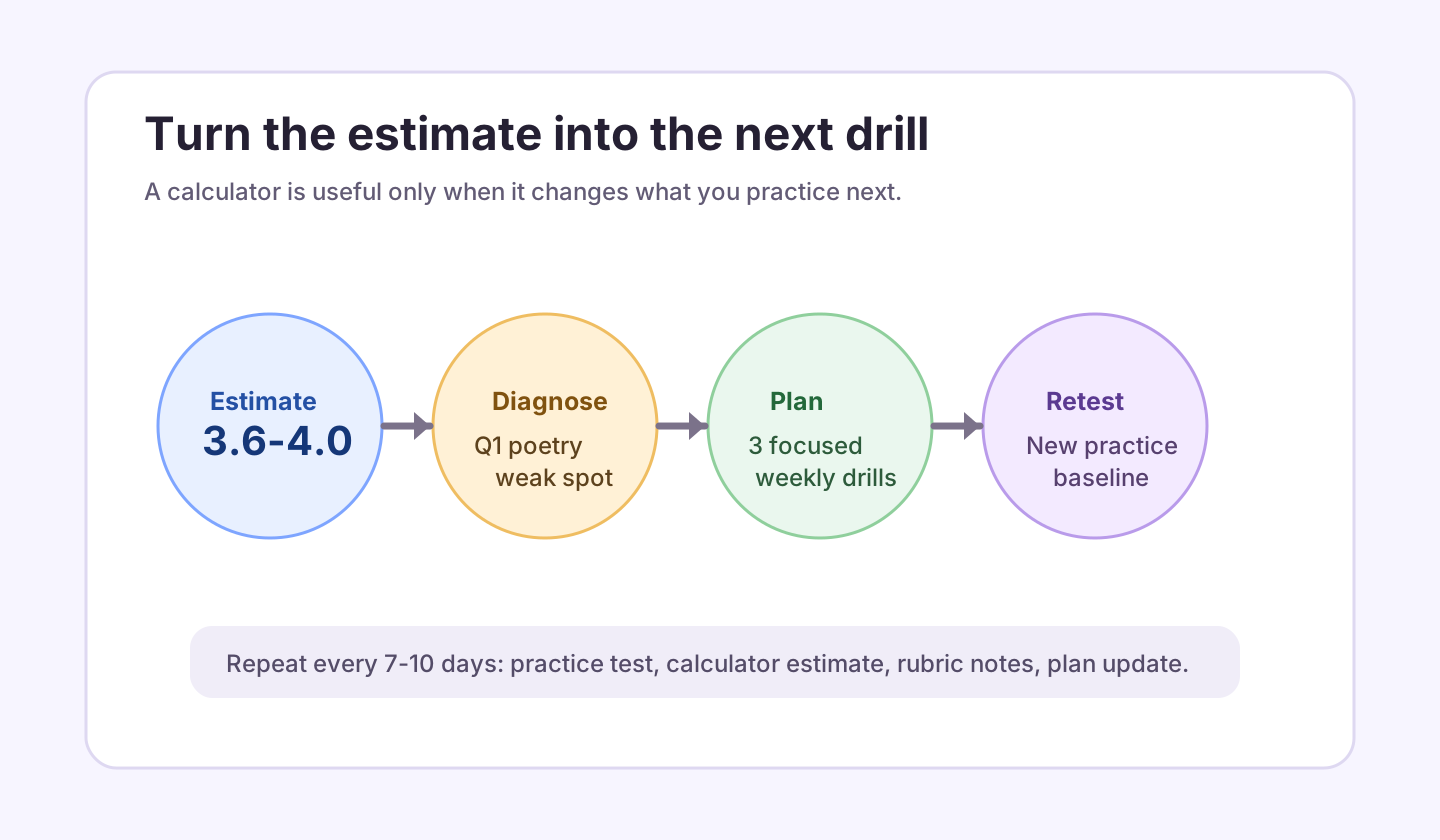
Figure: The useful loop is estimate, diagnose, plan, retest — not repeated guessing.
Common AP Lit calculator mistakes
Mistake 1: Treating an estimate as an official score
A calculator cannot know the final scoring conversion for your exam administration. Use the output as a planning range.
Mistake 2: Entering essay scores without rubric evidence
A self-assigned 5/6 essay score is only useful if you can explain it with the rubric. Ask: did the essay make a defensible thesis, use specific evidence, and explain how the evidence supports the interpretation?
Mistake 3: Ignoring the 55% free-response weight
Students often keep drilling MCQ because it is easier to score quickly. But AP Lit gives more weight to free response, so a weak essay pattern deserves direct practice.
Mistake 4: Comparing scores from different practice conditions
A relaxed weekend practice set and a timed Bluebook-style mock are not equivalent. Track time limits, calculator used, and source material in your notes.
Mistake 5: Using outdated or opaque calculators without cross-checking
If a tool does not explain its assumptions or update context, compare it with another estimator and the College Board's published scoring resources.
A reliable AP Lit calculator workflow
Use this lightweight workflow after every full practice exam:
- Save the practice source, date, and timing conditions.
- Record MCQ correct answers and each essay rubric score.
- Run two calculators and record the score range, not just one number.
- Copy the essay feedback into your notes.
- Choose one section target for the next 7-10 days.
- Retest after you have completed the planned drills.
This is where a planning system matters. A calculator creates a signal; a workspace turns that signal into a repeatable study cycle. See AFFiNE's digital workspace setup for students if you want a simple place to combine practice tests, essay comments, reading notes, and weekly tasks.
AP Lit Calculator FAQs
1. Is there an official College Board AP Lit calculator?
No. The College Board publishes exam structure, scoring guidelines, score reports, and score distribution resources, but it does not publish a public official AP Lit score calculator. Public calculators are third-party estimators.
2. What is a good AP Lit score?
A 3 is commonly considered a qualifying AP score, while 4 and 5 are more likely to earn credit or placement at selective colleges. Credit policies vary by institution, so check the College Board's AP credit policy search or your target college's registrar page.
3. When is the AP Lit exam in 2026?
The College Board lists the 2026 AP English Literature and Composition Exam for Wednesday, May 6, 2026, at 8 AM local time. Always confirm with your school because local administration details can affect your schedule.
4. How many points do I need for a 5 on AP Lit?
There is no fixed public raw-score threshold that guarantees a 5 every year. A high multiple-choice score plus consistently strong essays puts you in the right range, but the final conversion depends on the exam administration and scoring process.
5. How accurate are AP Lit score calculators?
They are useful directional tools, not official score reports. Accuracy depends on the calculator's assumptions, the practice exam source, the essay scoring quality, and whether you used timed conditions.
6. Should I use Albert.io, Fiveable, or AP Pass?
Use Albert.io or a similar detailed estimator when you want separate MCQ and essay inputs. Use AP Pass for a quick rough check. Use Fiveable-style resources for review support. Cross-check when the estimate affects a major study decision.
7. Can I use an AP Lang calculator for AP Lit?
No. AP Lang and AP Lit test different reading and writing skills. Keep separate score logs and study plans for each exam.
8. What should I do after a calculator predicts a 3?
Do not panic. Find the section causing the drag. If MCQ is weak, drill passage types and error patterns. If essays are weak, focus on thesis clarity, evidence selection, and commentary before taking another full mock.
9. How often should I use a calculator?
Use one after full practice exams or meaningful section practice, not after every tiny drill. A useful rhythm is every 7-10 days: practice, estimate, diagnose, plan, and retest.